
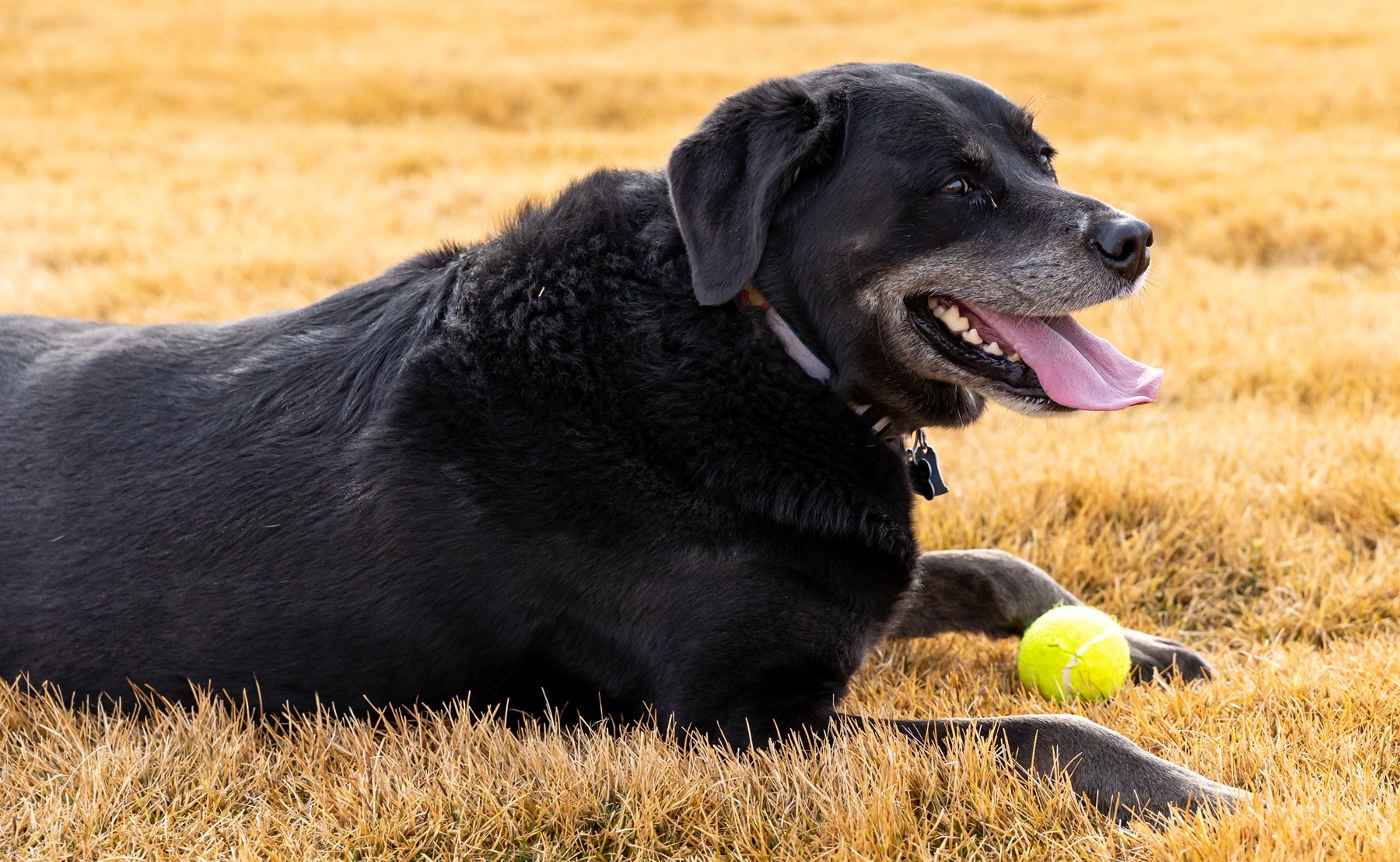
If you've watched a dog who used to bound up the stairs start hesitating at the bottom step, or a cat who used to leap onto the counter start choosing the couch instead, you already know something has changed.
Signs of arthritis in dogs and cats can be subtle. Stiffness after naps, reluctance on stairs, hesitation before jumping, difficulty getting up, changes in grooming, or simply being less active can all be signs of joint pain.
The hard part is knowing what to do about it.
Arthritis is common in older dogs and cats. But "common" doesn't mean "just part of getting old," and it certainly doesn't mean there's nothing we can do about it.
At Tamberly Animal Hospital in Milton, we approach arthritis and mobility loss as the progressive medical problems they are. That means figuring out what's hurting, measuring what we can, treating pain and inflammation, and working to preserve the strength and mobility your pet still has.
Start With Knowing, Not Guessing
Pain in animals is surprisingly easy to miss. Pets compensate well, and a limp that shows up on a bad day may have disappeared by the time you're standing in the exam room.
Gradual changes can be even harder to recognize. When you see your pet every day, a joint that's been getting a little stiffer every month can slowly become the new normal.
At senior exams every six months, we have a chance to notice changes that may be hard to see from day to day.
The Hands-On Exam Comes First
Before any equipment comes out, we do a thorough orthopedic exam. We're moving joints through their range of motion and feeling for pain, swelling, muscle asymmetry, instability, and grinding or crepitus. We compare one side with the other and check the spine and hips along with the legs.
This is where we find a surprising number of problems.
A dog can have significant arthritis in a hip or elbow and still trot into the exam room wagging. They've simply learned to shift their weight or change the way they move without developing an obvious limp.
Cats can be even harder to read. They don't necessarily limp either. They may choose the couch instead of the counter, hesitate before jumping, groom less, or simply spend less time moving around the house. Those changes are easy to write off as aging when they're actually signs of pain.
Then the Stance Analyzer Helps Us Measure It
The stance analyzer adds another piece of information. It's a platform that measures how a pet distributes weight across all four limbs while standing.
If a dog is consistently taking weight off one leg, we can see it and measure how much.
The machine doesn't replace the orthopedic exam. It can't feel a painful joint, notice muscle loss, or tell us why a pet is shifting their weight. But it gives us objective numbers to use alongside what we find on the exam and what you're seeing at home.
It's especially useful over time. Instead of relying entirely on "he seems better," we can see whether weight distribution is actually changing. And if it isn't, that's useful too. We may need to change what we're doing.
Medication Still Matters
"More than pain pills" doesn't mean without pain medication.
Arthritis hurts, and controlling both pain and inflammation is an important part of treatment. Inflammation within an arthritic joint can contribute to continued cartilage damage. Pain changes the way a pet moves, which leads to muscle loss and puts additional stress on other joints. For many pets, an anti-inflammatory medication is one of the foundations of treatment.
We may also use medications that target other types of pain, along with omega-3 fatty acids and selected joint-support products. What we use depends on the individual pet, their other medical conditions, and how their arthritis changes over time.
For a closer look at arthritis medications, how we choose among them, and how we use them safely in senior pets, read [Arthritis Pain Medication for Dogs and Cats: What Are the Options?]
Laser Therapy: Calming Pain and Inflammation
Laser therapy is another tool we use frequently for painful joints and muscles. Therapeutic laser delivers specific wavelengths of light to the tissues we're treating, and research suggests it can help reduce pain and inflammation and support tissue healing.
The treatment doesn’t involve needles, and most pets don’t need sedation. Many settle in and seem to enjoy the warmth.
Really painful pets can be a little different during their first few sessions. I often compare it to getting a massage when you need one a little too badly. Working on something that's already sore may not be quite as relaxing as you'd hoped at first. Then, fairly quickly, you start feeling better.
A different issue often comes up several treatments later.
Around the fourth or fifth session, I start warning owners to help their pets control themselves. The pain may be improving much faster than the muscle strength does. Suddenly the dog who hasn't wanted to do much for months wants to run, play, climb stairs, or take a long walk.
Their muscles may not be ready for that yet.
We occasionally even see a small setback at this point because a pet feels good enough to overdo it. If that happens, let us know. We may need to restrict activity a little, continue strengthening, or adjust pain control while the rest of the body catches up.
Laser doesn't cure arthritis. What it can do is help us get a painful pet more comfortable so we can work on getting them stronger and more active again.
Platelet-rich plasma, or PRP, gives us another way to treat certain painful joints.
We draw a blood sample from your pet and process it to concentrate the platelet component of the plasma. That preparation is then injected into the affected joint, generally along with hyaluronic acid. Platelets release growth factors and other signaling molecules that can help reduce inflammation and pain within an arthritic joint, while hyaluronic acid helps improve lubrication and the joint's ability to move smoothly.
PRP isn't appropriate for every pet or every joint, so it's something we consider individually rather than recommending automatically. In the right patient, though, it can be another useful tool for improving comfort and function and helping us preserve mobility over the long term.
Physical Therapy: Helping the Body Catch Up
One of the biggest problems with chronic joint pain is what happens to the rest of the body.
A painful pet moves less. Less movement means less muscle. With less muscle supporting an already arthritic joint, moving becomes harder still.
And once we get the pain under better control, that muscle doesn't instantly come back. Your dog may feel ready for a long walk well before their body is ready for one.
That's where rehabilitation comes in.
We may use controlled walking, range-of-motion exercises, balance and weight-shifting work, or targeted strengthening exercises that can be continued at home. Some pets benefit from referral for more advanced rehabilitation, including underwater treadmill therapy.
We aren't exercising a painful pet simply to make them exercise. We're trying to preserve or rebuild the muscle they need to get up, walk comfortably, handle stairs, and keep doing normal things on their own.
Weight Matters, Too
Extra weight makes an arthritic joint work harder with every step.
For an overweight pet, even modest weight loss can make a meaningful difference. Excess body fat can also contribute to inflammation, giving us another reason to pay attention to body condition in pets with arthritis.
Not every arthritic pet needs to go on a dramatic diet. But if we're trying to make a painful joint's job easier, reducing unnecessary weight is one of the tools we shouldn't overlook.
Why We Build a Plan Instead of Reaching for One Tool
Arthritis creates more than one problem, so it rarely makes sense to expect one treatment to solve all of them.
We need to control pain. We need to address inflammation. We want to support joint health and preserve muscle. Sometimes we need laser or PRP to give us another way to improve comfort and function. If a pet is overweight, reducing the load on those joints matters too.
Meanwhile, the orthopedic exam, your observations at home, and measurements from the stance analyzer help us decide whether the plan is actually working.
The combination will be different from one pet to another, and it may be different for the same pet a year from now. Osteoarthritis is progressive. Our treatment plan has to be able to change with it.
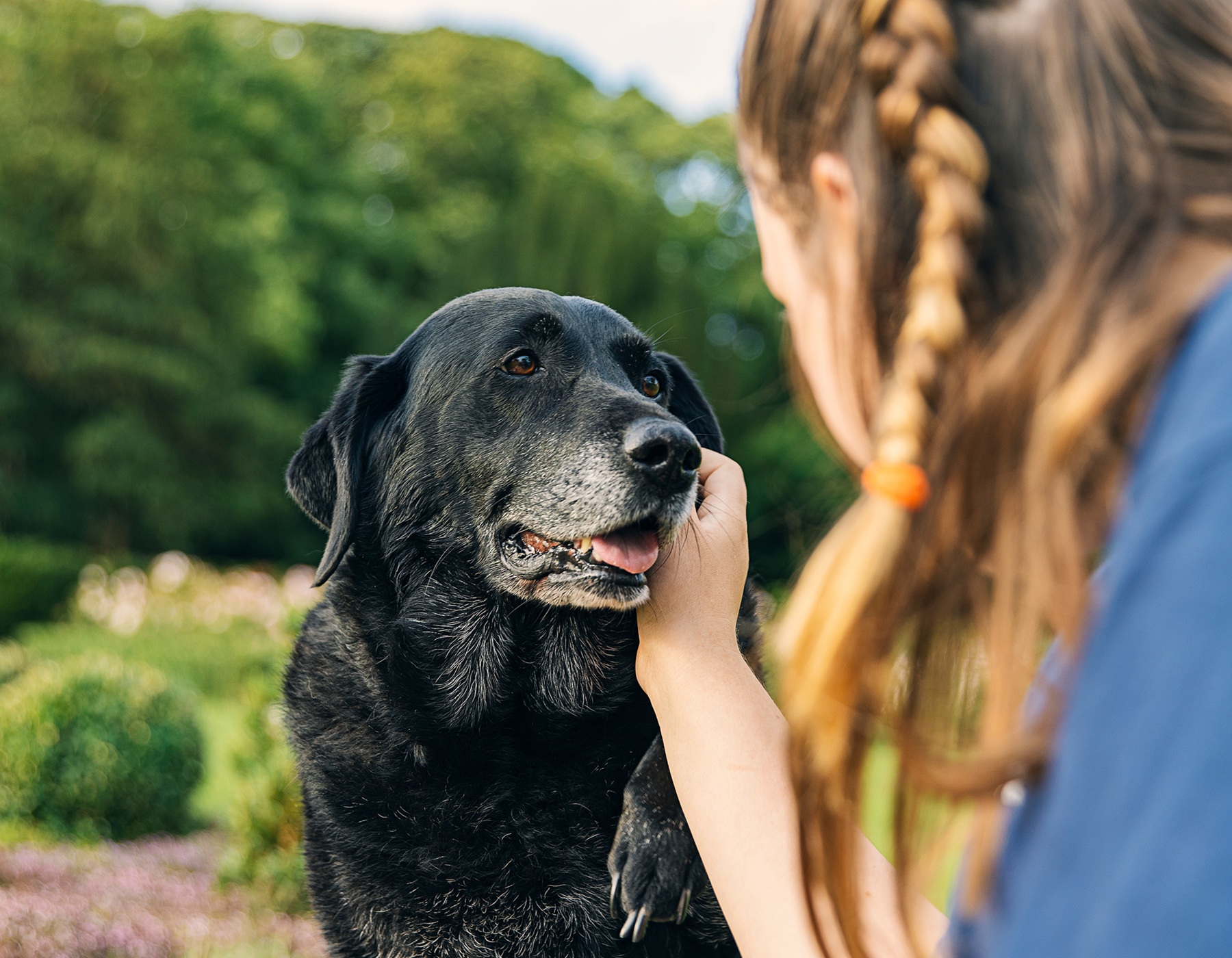
Our goal isn't just to make a sore joint hurt less today. We want your pet still greeting you at the door, taking the daily walk, climbing onto the bed, or jumping up to their favorite sunny spot — for as long as possible.
If Your Pet Is Slowing Down
If you've noticed stiffness after naps, reluctance on stairs, hesitation before jumping, difficulty getting up, or a pet who simply isn't as active as they used to be, it's worth finding out why rather than assuming it's old age.
This is one of the reasons we recommend exams every six months for senior pets. These changes can happen slowly enough that they're hard to see from one day to the next.
If your senior dog or cat is slowing down and you're looking for help with arthritis or mobility problems in Milton, Alpharetta, Canton, or the surrounding area, give us a call at (678) 459-6001 or book an appointment online. We'd love to help your pet keep moving comfortably through their senior years.