
Helping Your Dog Feel More Comfortable, Move More Easily, and Recover.
At Tamberly Animal Hospital, we use a Companion Class IV therapeutic laser to help dogs with arthritis, back pain, injuries, and wound healing.
We examine your dog first and discuss whether laser therapy will help. During treatment, we watch their comfort and ask about changes at home. Their response helps us decide how often they need to come in and whether we need to change anything else in their care. 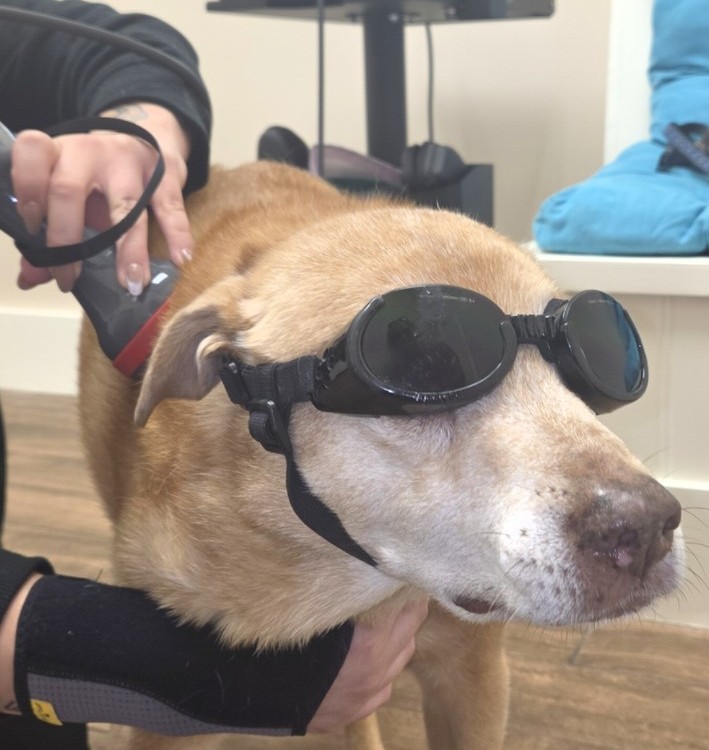
Call: (678) 459-6001
When Do We Recommend Laser Therapy?
We often use laser along with medication, rehabilitation, or other treatment. It can help relieve pain and support healing while we address what’s causing the problem.
We may recommend laser treatment for:
- Arthritis and other orthopedic conditions. Laser can help manage discomfort as part of a mobility plan. Our Mobility & Arthritis Care page explains how we approach these problems.
- Selected spinal conditions, including intervertebral disc disease (IVDD)
- Muscle, tendon and ligament injuries, including iliopsoas (groin pulls) injuries and biceps tendonitis (shoulder tendonitis).
- Ear infections, along with medication and care for the underlying cause.
- Lick granulomas, the persistent sores caused by repeated licking. We also treat the skin problem and address why your dog keeps licking.
- Wounds and surgical incisions
If your dog suddenly becomes weak, cannot stand or walk, or has severe back pain, call right away. They need an examination rather than waiting for a laser appointment.
What Does Laser Therapy Do?
Our therapeutic laser uses red and near-infrared light to help reduce pain and inflammation and support tissue healing. Unlike a surgical laser, it does not cut tissue.
Molecules within cells absorb the light and trigger a process called photobiomodulation.
This stimulates the mitochondria—the cells’ energy-producing structures—to produce ATP, the energy cells use to function and repair themselves. It also helps improve circulation in the treated area and regulate inflammation.
Photobiomodulation can promote collagen production and the formation of new blood vessels, both of which help with tissue repair. Researchers have studied its role in nerve repair as well.
Our Companion Class IV laser combines near-infrared wavelengths with higher power to deliver light energy to deeper muscles, tendons, ligaments, and joints.
.jpg)
What Happens During a Visit?
We get your dog comfortable and position them so we can reach the areas that need treatment. Some dogs stand; others prefer to sit or lie down.
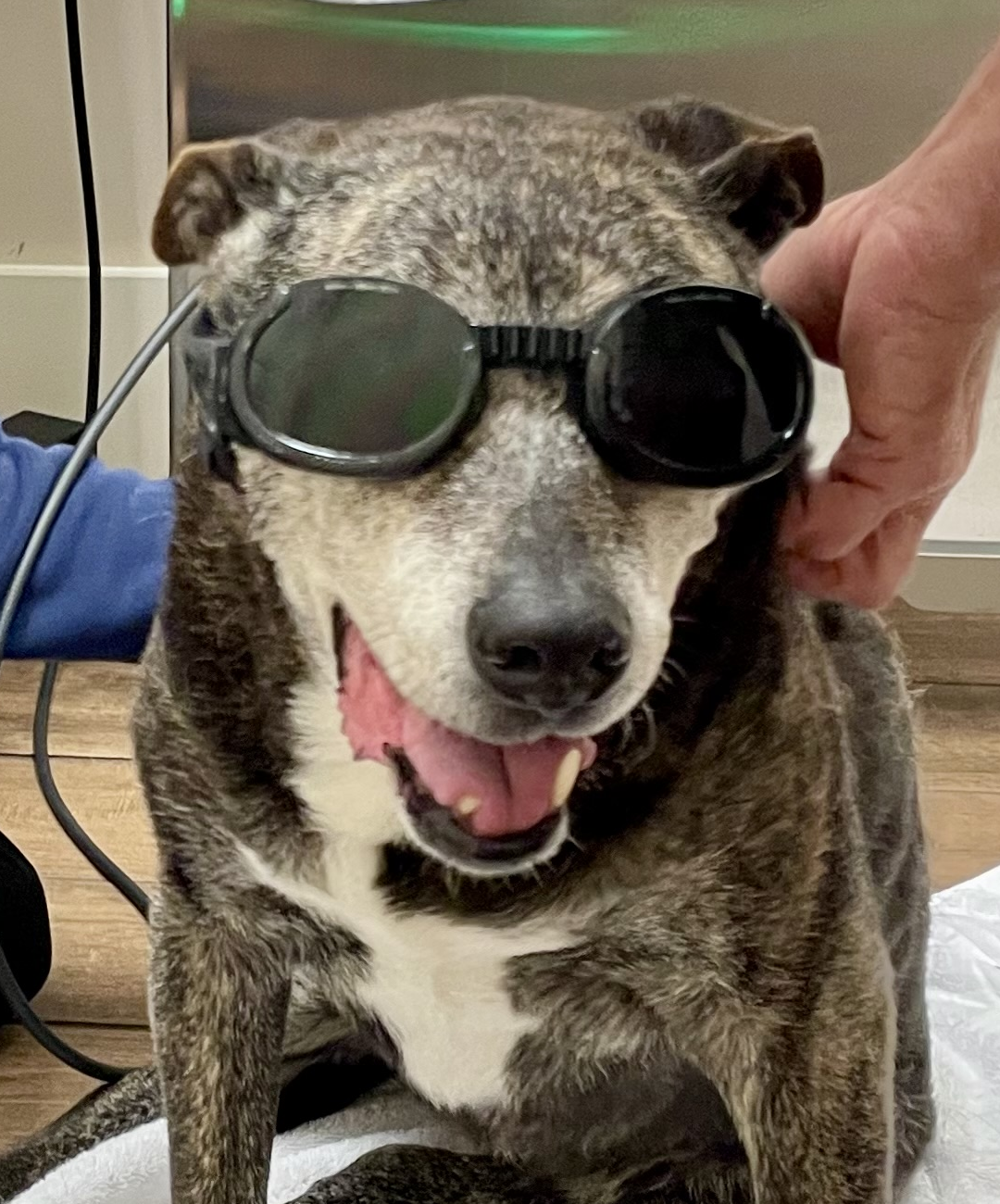
Your dog and everyone in the treatment area wear protective eyewear. A team member moves the laser handpiece over the area, watching how your dog responds. They may feel gentle warmth during treatment.
Most dogs don’t need sedation. After a few treatments some dogs even come to enjoy and anticipate their visits. The length of the visit depends on their size and how many areas we’re treating. We’ll give you an idea of what to expect when we discuss the plan.
Remember to bring your camera—dogs in their protective goggles make for some very cute pictures.
How Many Treatments Will My Dog Need?
Since we’ll want to tailor the treatment plan to your dog, we’ll discuss the schedule after examining your dog.
For chronic conditions, we usually start with visits closer together, then lengthen the time between treatments as your dog improves. We work toward an interval that keeps them comfortable.
For an acute injury or another short-term problem, we may give a series of treatments over several days or weeks. Once they’ve recovered, they may not need further laser treatment.
How Will We Know if it's Helping?
Tell us what you’re noticing at home. Is your dog getting up more easily? Sleeping more comfortably? Walking without as much hesitation?
We examine wounds and skin problems to check healing. For dogs with mobility problems, repeat exams and measurements of how they distribute weight across their legs can help us track progress.
If your dog isn’t improving, we look again. We may need to change the treatment schedule, adjust medication or other care, or investigate further.
Feeling better doesn’t always mean an injury has healed or muscle strength has returned. Keep following any activity restrictions, even if your dog is eager to get back to playing.
Is Laser Therapy Safe?
Laser therapy is generally well tolerated when trained staff use appropriate settings and treatment techniques.
Some dogs feel temporarily sore after treatment, especially during the first few sessions. Think of a massage when your muscles are so tense that it’s therapeutic, but not especially relaxing.
We watch your dog’s comfort throughout the visit and may shorten a treatment or adjust the settings if needed. If they seem more uncomfortable afterward, let us know. That soreness should ease as treatment progresses, rather than continue after every visit.
A Class IV laser can injure eyes or overheat tissue if used improperly. Protective eyewear and careful handling are essential.
Could Laser Therapy Help My Dog?
If your dog is sore, recovering from an injury, or has a wound that needs attention, we can examine them and talk with you about whether laser would help.
If they’ve already been diagnosed or are receiving treatment elsewhere, bring their records and a list of medications and supplements. We’ll review what has helped, what hasn’t, and what else we can offer.
Call: (678) 459-6001
Have questions? Text us at (678) 459-6001 or email: [email protected]
Frequently Asked Questions
How long will a laser therapy session last for my dog?
Most treatments are relatively quick, with sessions for multiple joints lasting up to 20 minutes. The exact time depends on the size of the area being treated and the condition, but many sessions take only several minutes.
Is Class IV laser therapy the same as red light therapy?
No. They both use light, but they are not the same treatment. Class IV laser delivers much more energy and is designed to reach deeper tissues
Can laser therapy be used along with medications and other treatments?
Yes. We often use it as one part of a larger treatment plan rather than as a stand-alone therapy.
Do dogs need to be sedated for laser therapy?
Usually not. Treatments are noninvasive and generally easy to perform while a dog is awake
Are there dogs who should not receive laser therapy?
Yes. Laser therapy is not appropriate over every type of tissue or condition, so we decide case by case whether it makes sense for your dog.
Don't forget to follow us on social media: Facebook, Instagram.