
Written by Dr. Denise Melton, DVM • Tamberly Animal Hospital • Milton, GA
Your dog gets up from bed, crosses the kitchen, and heads outside. If they have arthritis, that ordinary trip may involve slipping on the floor, struggling with a step, and having trouble holding a comfortable position to go to the bathroom.
Medication and other therapies can help with pain, but those obstacles are still there. A few changes at home can make getting around easier.
Sometimes the first thing to change is the floor beneath their feet.
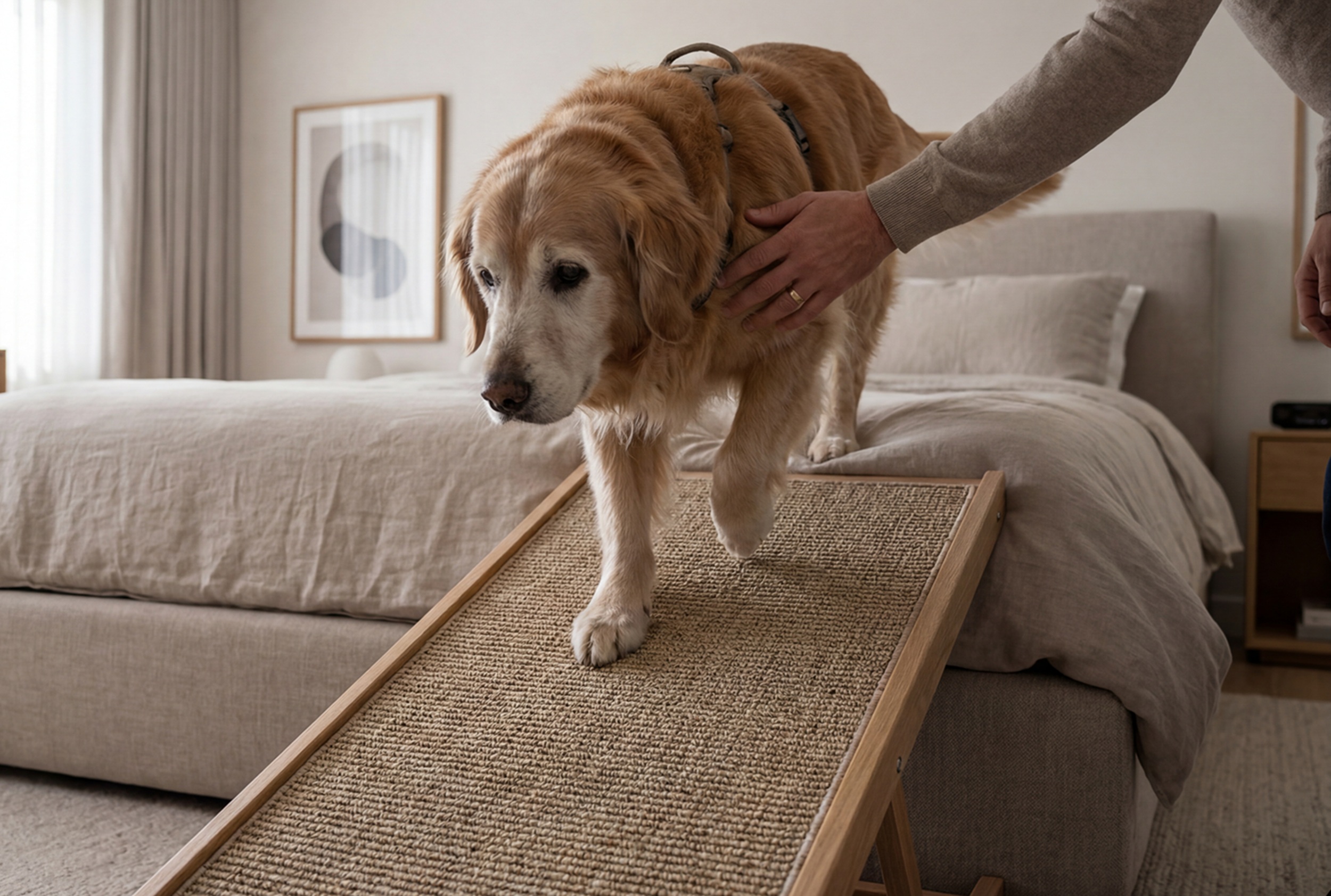
Watch their everyday routes
Watch your dog move from their bed to the water bowl, the door, and wherever they like to spend time with you. Where do they hesitate, slip, or need help?
Start with those spots. You don’t need to rearrange the entire house:
- The floor where they get up after sleeping.
- A slippery hallway or kitchen.
- The turn before the back door.
- Steps on the way outside.
- The spot where they stand to eat or drink.
- The landing at the top or bottom of stairs.
If you need advice, bring a few short videos to their appointment. Include getting up and turning. Those movements can show us difficulties we might miss if we only see them walking in a straight line.
Give them something to grip
Smooth floors can be difficult for a dog whose legs are sore or weak. Their feet slide apart, and getting up takes more effort.
Put secure rugs or nonslip runners along their usual routes. Check that they stay put and the edges don’t curl up. You don’t want the rug sliding out from under your dog.
The area around their bed needs particular attention. They need grip while getting their feet underneath them, not just once they’re standing.
Stairs need special attention
Uncarpeted stairs can be especially difficult. A securely fitted stair runner or nonslip carpet treads may help. Check that they won’t shift or trip anyone, people included.
Keep the stairwell well lit. Some older dogs don’t see as well in dim light, which can make stairs harder to navigate.
Some dogs need fewer trips on the stairs. Others may need to stay on one floor, with gates to prevent unsupervised stair use.
If your dog sleeps upstairs with you and can still manage the stairs safely, you may need to limit trips to going up at bedtime and coming down in the morning, with assistance if needed.
Boots and nail grips
Keeping nails trimmed and removing excess hair between the paw pads may help with footing. If your dog objects to having their feet handled, tell us. We can help make that care more comfortable.
Nonslip boots help some dogs. Look for rubber soles that grip smooth floors, soft padding to cushion the paws, and adjustable straps that hold the boots in place without being too tight.
Watch your dog walk in them. The boots shouldn’t twist, slip, or make walking awkward. Some dogs only need them on the rear feet; others need them on all four.
Use booties for short periods, rather than leaving them on all day. Remove them between uses and check the paws and skin around the straps for rubbing, redness, moisture, or sores. Take them off if your dog seems uncomfortable or if they get wet.
Dr. Buzby’s ToeGrips are another option. These small rubber grips fit around the toenails to provide traction without covering the whole paw. They may suit dogs who don’t tolerate boots. Correct sizing and placement matter, and we can discuss which option would work for your dog.
Make their bed easy to use
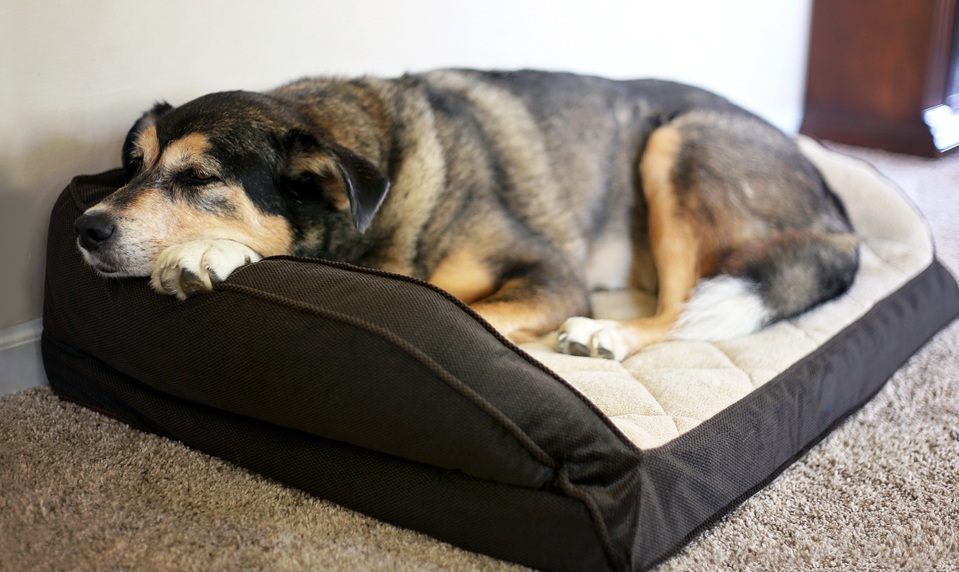
A bed should be comfortable to rest on and easy to get out of. I struggle to get up from a couch that’s too soft, and dogs can have the same problem with bedding they sink into. A high edge or raised bed may be hard to step into.
Look for supportive cushioning, a low entry, and a base that won’t slide. Put it somewhere your dog likes to be, with good footing around it. Some dogs enjoy a warmer sleeping spot in winter and a cooler one in summer. Watch where yours prefers to settle.
If stairs are becoming too difficult, consider a sleeping area on the main floor. Being near you may help them settle, especially if they’ve always slept in your room.
You don’t necessarily need an expensive bed. Watch how your dog uses the one they have. Can they lie down, change position, and get up comfortably?
Watch the jumps, too
A dog may still manage a jump onto the couch but struggle with the landing when they come down. Watch both directions.
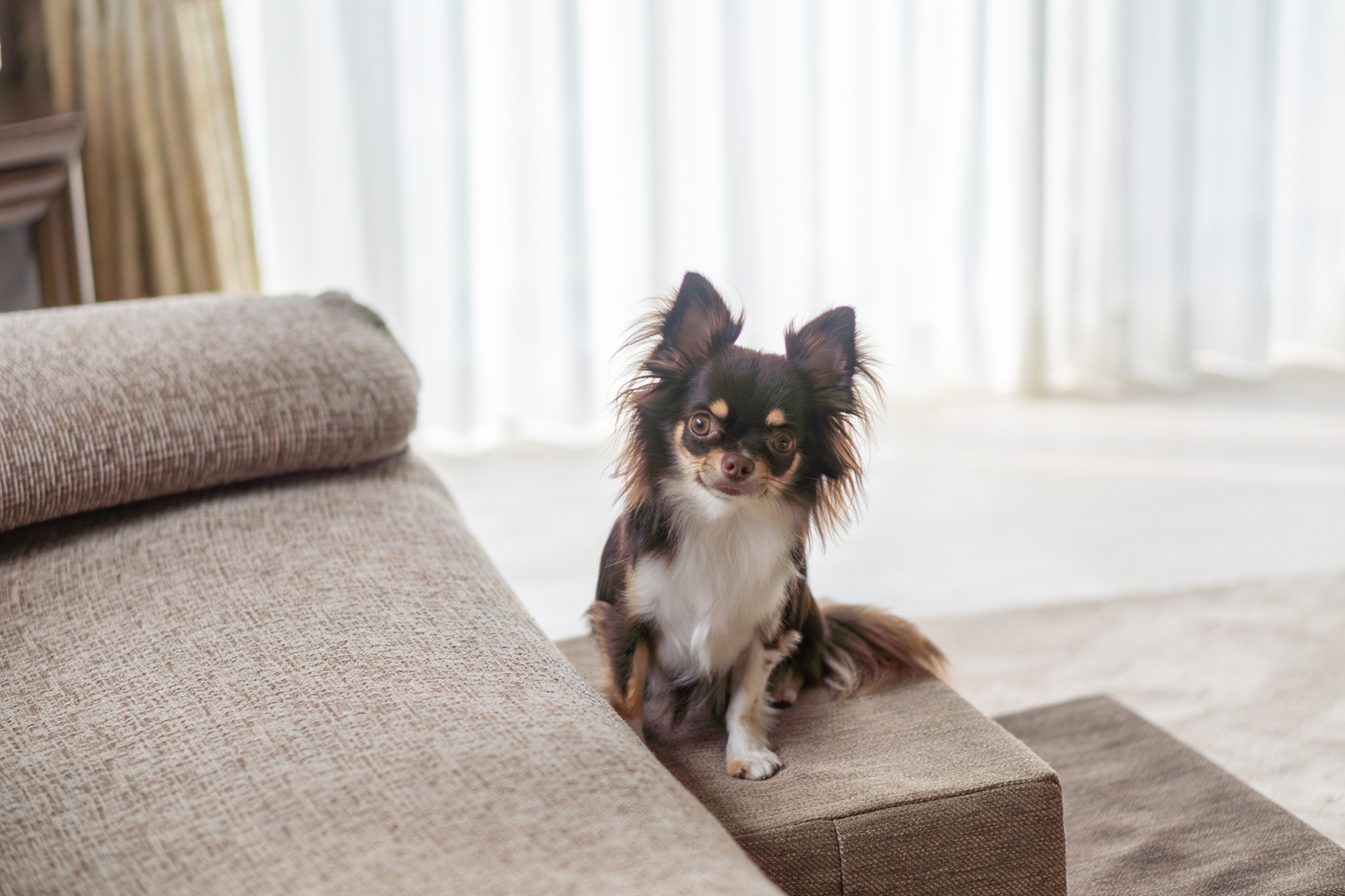
A stable ramp with a nonslip surface may help, provided the slope is manageable and your dog is comfortable using it. Give them time to learn. Don’t pull or push them onto a ramp they’re frightened of.
For car trips, ask us about a ramp or how to help your dog in and out. Lifting a large, painful dog can be difficult for both of you. Pulling on the collar or lifting without supporting them properly may hurt them.
Make bathroom trips easier
Getting outside takes several steps: standing up, reaching the door, getting into the yard, and holding a position long enough to go.
Keep the route clear, well lit, and easy to walk on. Some dogs need more frequent trips or a bathroom spot closer to the door.
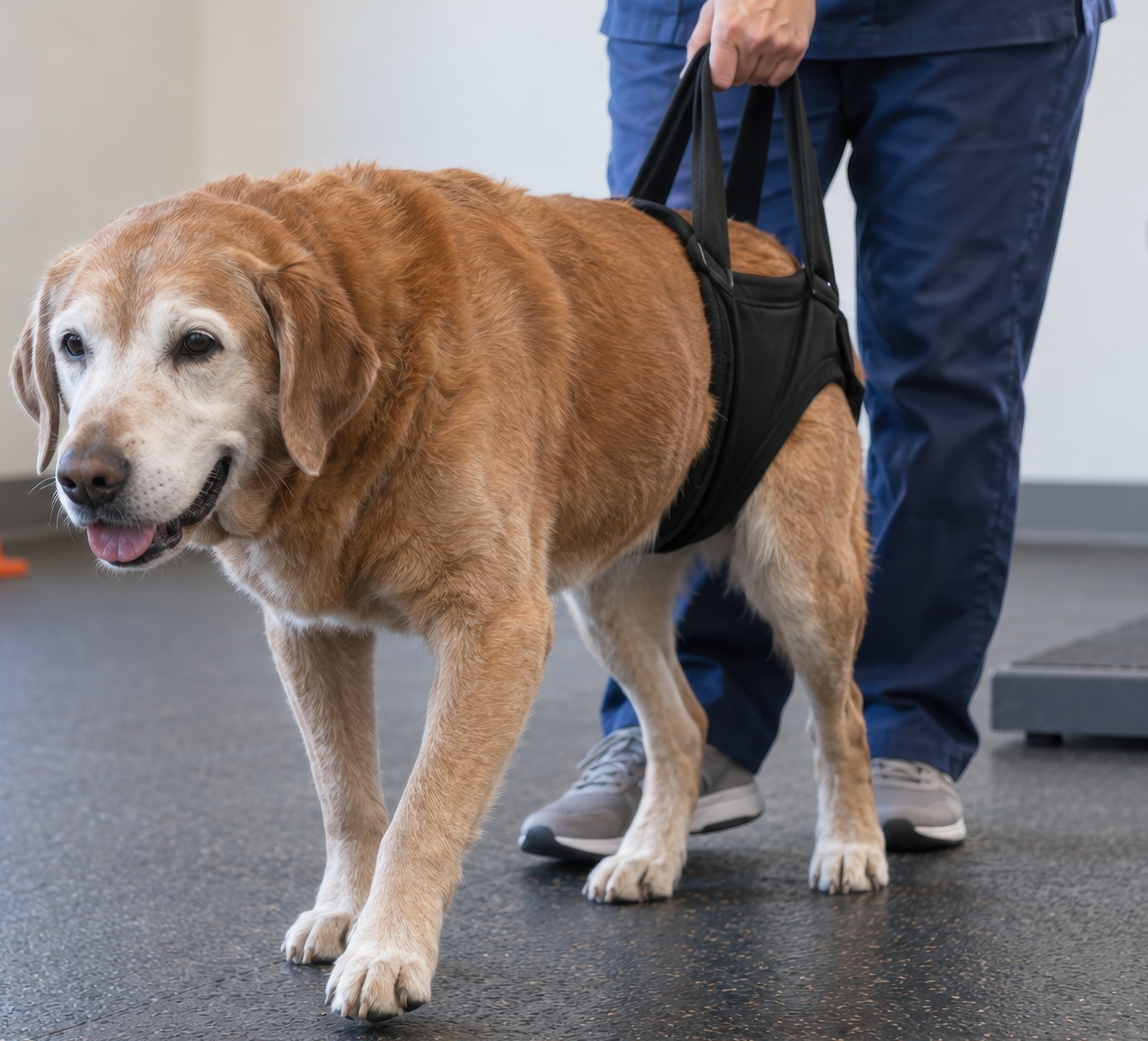
A properly fitted support harness can help a dog who needs assistance. Ask us to show you how to use it and how much support to give.
Tell us about new accidents indoors. Difficulty getting outside may be part of the problem, but urinary problems and other illnesses can cause accidents, too.
Keep them moving without overdoing it
Sometimes we’ll recommend restricting activity while a particular problem heals. But prolonged inactivity can leave an arthritic dog weaker and make moving harder.
How much exercise is appropriate depends on their pain, strength, joint stability, and other medical problems. We’ll help you work that out.
For many dogs, shorter, regular walks are easier than an occasional long outing. Choose good footing, go at their pace, and let them stop and sniff.
If your dog starts slowing down or struggling partway through a walk, make the next outing shorter. Count the whole trip, including getting home, so you finish before they reach the point where they struggled last time.
Watch how they feel afterward and the next morning. A dog who happily finishes a walk but has trouble getting up later may have done too much.
As pain improves, enthusiasm can return before strength does. Increase activity gradually and continue any restrictions we’ve given you.
Get guidance on strengthening exercises
There are plenty of exercise videos online, but an exercise that helps one dog may be wrong for another. An unstable knee, a spinal problem, and an arthritic hip can need different care.
We may recommend exercises at home, physical therapy in the clinic, or referral for rehabilitation. Ask for a demonstration so you know how to do each exercise, how often, and when to stop.
Don’t force a sore joint through a stretch or keep going when your dog resists. Tell us if an exercise seems painful or difficult. We may need to change it or get their pain under better control first.
Watch weight and muscle
Extra weight makes painful joints work harder. If your dog needs to lose weight, we can help you work out portions and treats while making sure they get the nutrition they need.
Dogs with arthritis can also lose muscle, even when their weight stays the same. That lost muscle can make each activity more difficult. If the spine or back legs look thinner, let us take a closer look rather than simply increasing their food.
We check both body fat and muscle. Your dog needs enough strength to get up and move, without carrying unnecessary weight.
Keep the things they enjoy
Your dog may no longer manage their old hiking route but still enjoy a short sniffing walk, sitting outside with you, or being in the room where everyone gathers.
Move their bed closer to the family. Try a shorter route with easier footing. Find quiet activities they enjoy without running, jumping, or making sharp turns.
If they’re withdrawing from the family or losing interest in things they usually like, tell us. We don’t want to write that off as getting older.
What else can help?
Rugs, ramps, and a better bed can make daily life easier. Your dog also needs treatment for the arthritis itself. If they don’t yet have a treatment plan, we can examine them and discuss where to start.
If they have a care plan and they still can’t settle, don’t want to move, or need increasing assistance, we should examine them again. They may need a change in pain treatment, rehabilitation, or investigation of another problem.
At Tamberly, we want to know what’s still difficult after treatment starts. “He can walk farther, but he still can’t get up on the kitchen floor” gives us something specific to work on.
Our Mobility & Arthritis Care page explains how we evaluate movement and choose treatment. More Than Pain Pills: How We Treat Arthritis in Senior Pets describes how medication, laser, rehabilitation, and other treatments fit together.
Let’s look at what’s getting difficult
Schedule a mobility evaluation and bring your questions, videos, and examples of where your dog needs help. We’ll examine them, review what you’re seeing at home, and discuss treatment, activity, and equipment that may make daily life easier.
Whether your dog has recently been diagnosed or is having more difficulty despite treatment, we can help you decide what to change.
Call (678) 459-6001
Tamberly Animal Hospital • Birmingham Crossroads • Milton, GA
If your dog suddenly cannot stand or walk, has severe pain, or develops rapidly worsening weakness, call right away. If we’re closed, contact an emergency veterinary hospital.